Posts

Dedham Vale

Image
  Dedham Vale : The Tour de Stour   Route GPX File Denham Vale   Intro The ride circles Dedham Vale, a designated 'National Landscape' of 'Outstanding Natural Beauty' comprising the lower Stour Valley on the Suffolk / Essex border. It begins at Manningtree Station and circles back from Bures. Constable Country so it is beholden to all to visit Flatford Mill and Dedham but there are other sights, particularly for olde building nuttes like me. For the most part it follows quiet country roads (there are a few exceptions) and although you might think of Suffolk as being very flat, remember you are cycling up a river valley and rivers don’t flow uphill. Zooming In Dedham Vale – Bucolic Constable country. Flatford Mill – The scene of Constable’s ‘Hay Wain’. Ancient wool towns and villages Dedham Village The usual oddities including a dragon.  Route Tips Flatford Mill and Dedham are near the start and finish of the ride respectively. The northern leg of the r...
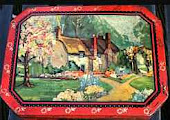
The Olde Country Cottage

Image
Country cottages. Warped ships' timbers, honeysuckle, pixie-cut thatched roof,  a misshapen chimney, the aroma of baking and  Vaughan Williams 'Pastoral' drifting out of the small paned window. Very twee.  Do you ever wonder whether they are really ancient or just more recent fakes?  This post is about the oldest, visible, surviving rural housing used by the common people and in particular, how much you can see from the road. It is impractical to include much detail in a post aimed at mobile phone readers, so  I have added notes and links in a postscript i n case you want to peek behind the floral curtains and take a closer look.  It isn't easy. Timber was the common building material and it lasts well, but the main survivors from medieval times are the stone buildings, like churches and mansions, which I am not concerned with here. There are few details, let alone complete houses, that have survived e xtensions, reconfigurations and improvements; and no c...

3. Mud

Image
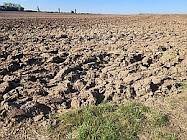
Our regional landscape has its origins in mud on the seabed, so at this point in our trudge through the stygian gloom of geological history, let us take a closer look at that  gloopy, crumbly  mud and the various types of stone that it morphed into.  Apologia. The passively interested reader might find this post sultifyingly tedious . Even the  graphics are awe-inspiringly uninspiring.  It is here  for the sake of completeness and  because, worryingly, I think that mud has a story to tell.  On its travels around the planet, detailed in the previous posts, South East England often found itself either under or above water, or in a liminal zone between the two. What we see today is based on the compacted sediments of sand, gravel and biological detritus that slowly accumulated on the old sea floors. Under their own weight and the water above them, they turned into stone.  The different types of stone are the result of different mixtures of mater...