Posts

9 : From Britons to Saxons

Image
  My earlier posts deal with prehistory generally, and the series on my 'Pootler'  bike routes blog was simply linked to Oil Drum Lane. From here onwards, they will be different with the posts on Oil Drum Lane taking a broader and more thematic view of events, while the Pootler version, with the emphasis on taking a microscope to the changes in the landscape over time, will remain relatively untouched. The period after the Romans left is known as the  Dark Ages, not because they were particularly gloomy, but because we don't know much about them, so we superimpose our current ideas about how things are organised around kings, nations and regular armies. The reality was almost certainly more chaotic.  It  might be better to think of early England as being a bit like the Congo, with weak or non-existent central control and people with strong family and tribal loyalties. There would probably have been frequent informal invasions, many refugees, and a few wandering,...
8 : Bronze and Iron

Image
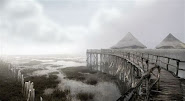
Must Farm  The last post saw the rise and fall of England's last Stone Age populations. They had replaced earlier hunter-gatherer populations and were in turn replaced by lighter-skinned farmers who introduced bronze tools. You make bronze by adding a small amount of tin to copper. Both were mined in Cornwall. Handy!  It is hard to determine what actually happened. The  changes seem to have been gradual but eventually profound. They could have resulted from the incomers simply breeding more quickly, aided by a better food supply. The  region might have acquired its first blonde, as well as one of the earliest forms of the Indo-European group of languages, which predominates today.  One of their villages has been unearthed in Norfolk and tells us a lot about them. See (Link)  Must Farm .   I f you are interested in pre-history, you could also check out (Link)  Flag Fen ,  which is nearby and where some of the local archaeological finds ar...

Deep Past 7 : Enter the Flintstones

Image
  In the last post, I covered the centuries between the arrival of the Middle Stone Age hunter-gatherers and the point at which they were elbowed out of the picture. For you lovers of jargon, that is the Palaeolithic and Mesolithic periods.  I tend to believe everything from Hollywood, so m y take on it is a simple progression from Raquel Welch, in her fetching furs in the film 'One Million Years B.C', to the Stone Age sophistication of the Flintstones.  These 'Neolithic' incomers were our first farmers and the first humans to have any real effect on the landscape. They took their time getting here; farming is thought to have originated in the East some 6000 years earlier and edged in our direction at less than a mile a year. Farming can support more people than hunter-gathering, so the population grew rapidly. W hile their predecessors adjusted their lives to the land they found, the newcomers shaped it to suit their needs. T his was the start of the clearance of the o...

Deep Past 6 : Welcome Homo

Image
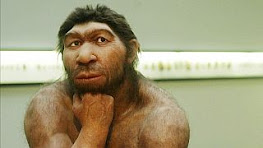
  I have avoided the human story in the blog so far because there were no humans  until around a million years ago. Only recently has  our species of  homo, who we laughingly call 'sapiens' or 'wise', had a visible impact. So there isn't much to see or say. N otwithstanding, for the sake of the narrative,  I want to tip my cap to our more direct predecessors, who,  one day around 5000 years ago, got to work doing a bit of landscape gardening and monument building,   Summary first, then a tad more detail for the interested.   Britain was still very much connected to Europe when early human hunter-gatherers arrived around 900,000 years ago. They didn't stay; the country was virtually uninhabitable for long periods during the ice ages. During the warmer breaks, when the ice melted and sea levels rose, the connections to Europe shrank, which must have discouraged migration Neanderthals appeared around 400,000 years ago. They came and went, d...